What the labels mean
- Live Working in the product today.
- Example A worked example, not an artist's data.
- Partner delivered Carried out through a distribution partner.
- Integration ready Built here; the outside connection is not live.
- Coming soon Not built yet.
- Requires verification A finding a person must check before it is acted on.
-
01
The artist sets their priorities
Six channels — release, creative, audience, rights, revenue, growth. The console works out a lane, a set of modules and three actions from where the faders sit, and recomputes it server-side when you open the plan.
See the plan a mix produces → -
02
The Twin reads the release
Release readiness, brand alignment, artwork strength, audience fit and a next move — each one showing what it looked at, how sure it is and what it is missing. It forecasts nothing.
Pick what you are working on → -
03
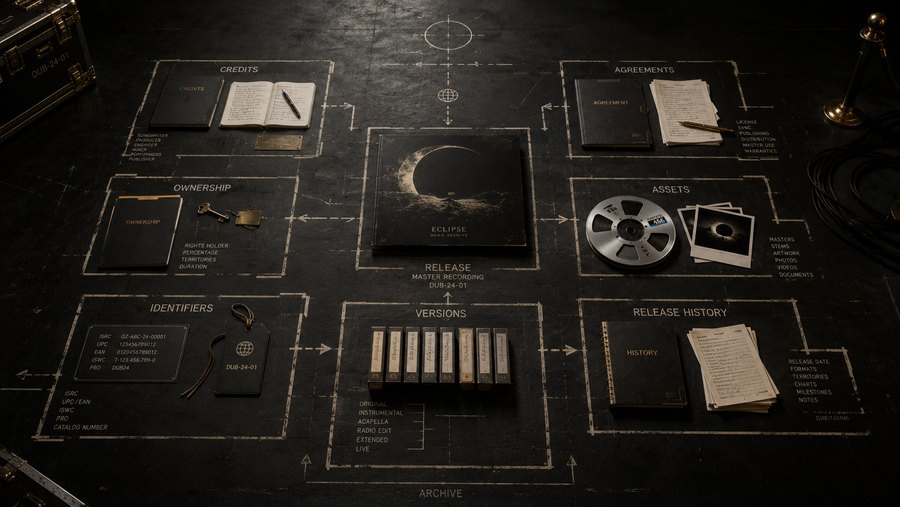
The release gets organized
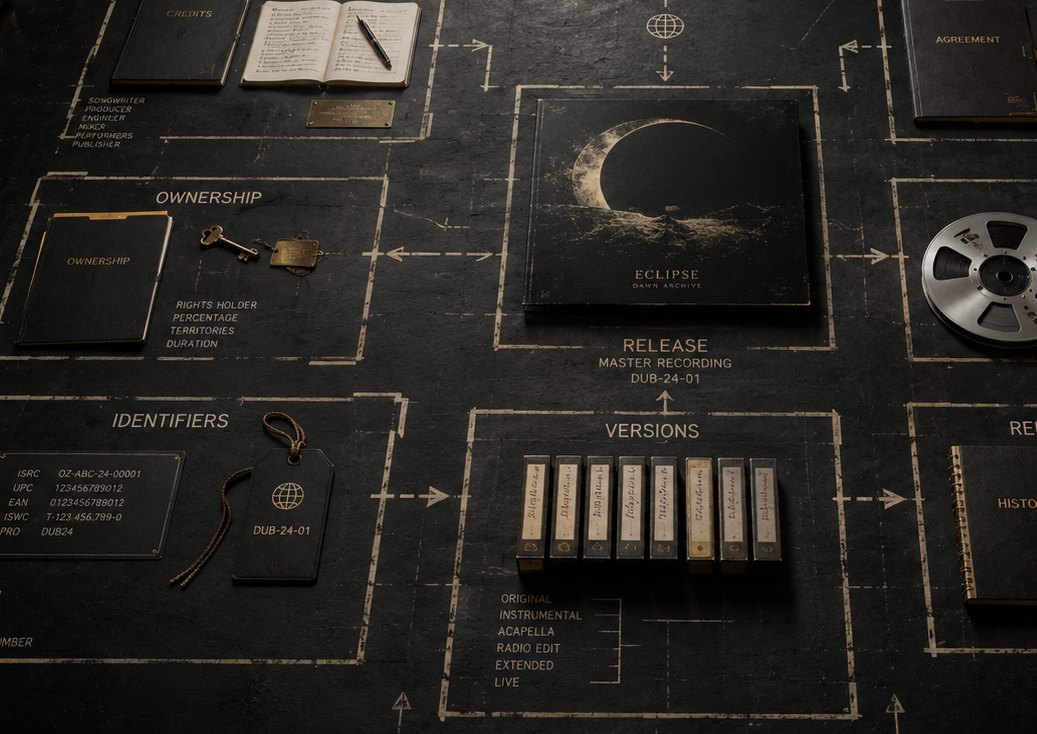
Credits, ownership, identifiers, versions, agreements, assets and history as one connected record. Adding a songwriter under Credits asks something of four other areas, and the record says so.
Open the example passport → -
04
The artwork and the campaign assets
Brief, directions, revision, approval, adaptation. Cover directions are generated from what you write; merch mock-ups are for deciding rather than for printing, and nothing here makes video.
What it does, and what it does not → -
05
The campaign gets built
A 14, 21, 30, 60 or 90-day plan worked backwards from release day: announcement, teaser, pre-save, artwork reveal, release day, follow-up. Street Banker prepares the posts. It does not publish them.
See the 21-day example → -
06
The release gets one door
One page per release: cover, streaming destinations, pre-save before release and listen-now after it, email capture with consent recorded, and a link per campaign so you can tell where somebody came from.
Open the example smart link → -
07
The response gets attributed
Where the visit came from, what device it was on, whether they had been before, and whether they left an address. A fan record the artist holds rather than rents.
See the example workspace → -
08
The package gets prepared
Prepare, validate, deliver, monitor, maintain. Street Banker assembles and checks the release; delivery goes out through the distribution partnership rather than a direct line from here.
What a release needs → -
09
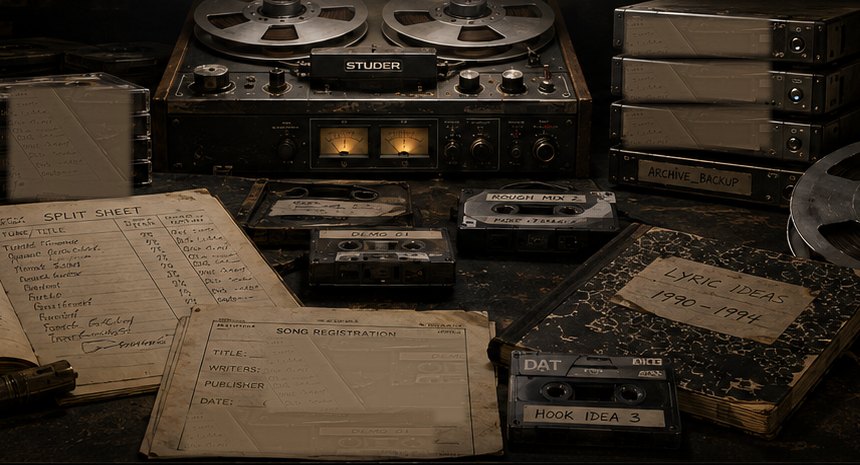
The splits get confirmed
Shares that add up, signed by the people they name, with identifiers attached. Incomplete or unsigned splits are a common reason royalty income becomes delayed or difficult to reconcile.
Who can see what → -
10
A gap gets found
Detect, match, verify, claim, track. A finding is a question with evidence attached — it requires verification before anything is submitted, and any figure is arithmetic on your own statements.
How the sweep works → -
11
The next move gets recommended
Everything above lands in one plan: a lane, the modules it points at, the first three actions and an estimated setup time. It is a starting point, not a placement.
Open your starting plan → -
12
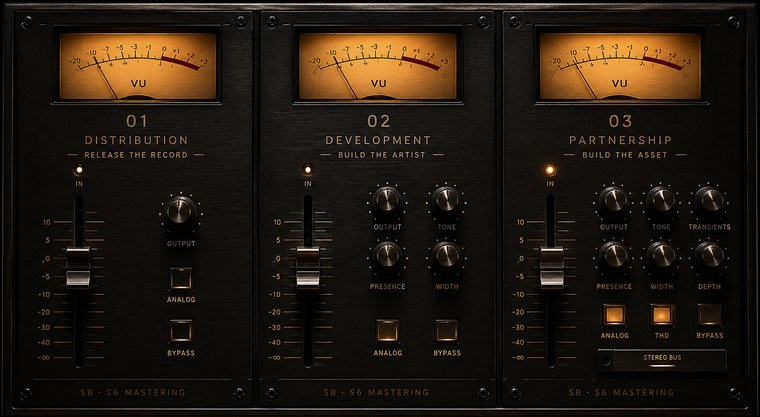
The artist picks a lane
Distribution, Development or Partnership — release infrastructure, deeper development, or long-term partnership. Lanes move as the work does.
Find the lane that fits →